

Short answer: toughened glass splashbacks are the better long-term choice for most Perth kitchens — they handle high temperatures, resist scratches, keep their colour for decades and clean with a single wipe. Acrylic splashbacks cost less upfront and suit budget renovations in low-heat zones, but they can’t sit behind a cooktop, they scratch with aggressive cleaning, and they tend to discolour under Perth’s long summers. If you want a splashback that still looks new in ten years, go glass. If you need a cheap splashback in a laundry or bathroom with no heat source, acrylic is fine.
Key Takeaways
- Glass splashbacks use toughened glass rated to around 220–260°C, making them safe behind gas and electric cooktops. Acrylic has limited heat resistance and should not be installed behind heat sources.
- Glass splashbacks cost roughly 140 to 650 dollars per square metre supplied and installed in Perth, depending on glass thickness, colour and complexity. Acrylic splashbacks are typically 30–50% cheaper upfront.
- Toughened glass resists scratching, UV fading and stains. Acrylic scratches easily, discolours over time, and needs gentle cleaning to avoid marking the surface.
- Glass splashbacks last 25+ years with proper installation. Acrylic splashbacks typically need replacing every 8–12 years.
- Glass is heavier and requires professional installation with specialist adhesive. Acrylic is lighter and more DIY-friendly — but professional cutting still matters for a neat finish.
- Glass is available in virtually any colour (painted glass), mirror finishes, digital print and metallic colours. Acrylic panels offer bold colour options but can’t match the depth of painted glass.
- For Perth’s climate — hot summers, high UV — toughened glass splashbacks hold up significantly better than acrylic over the long term.
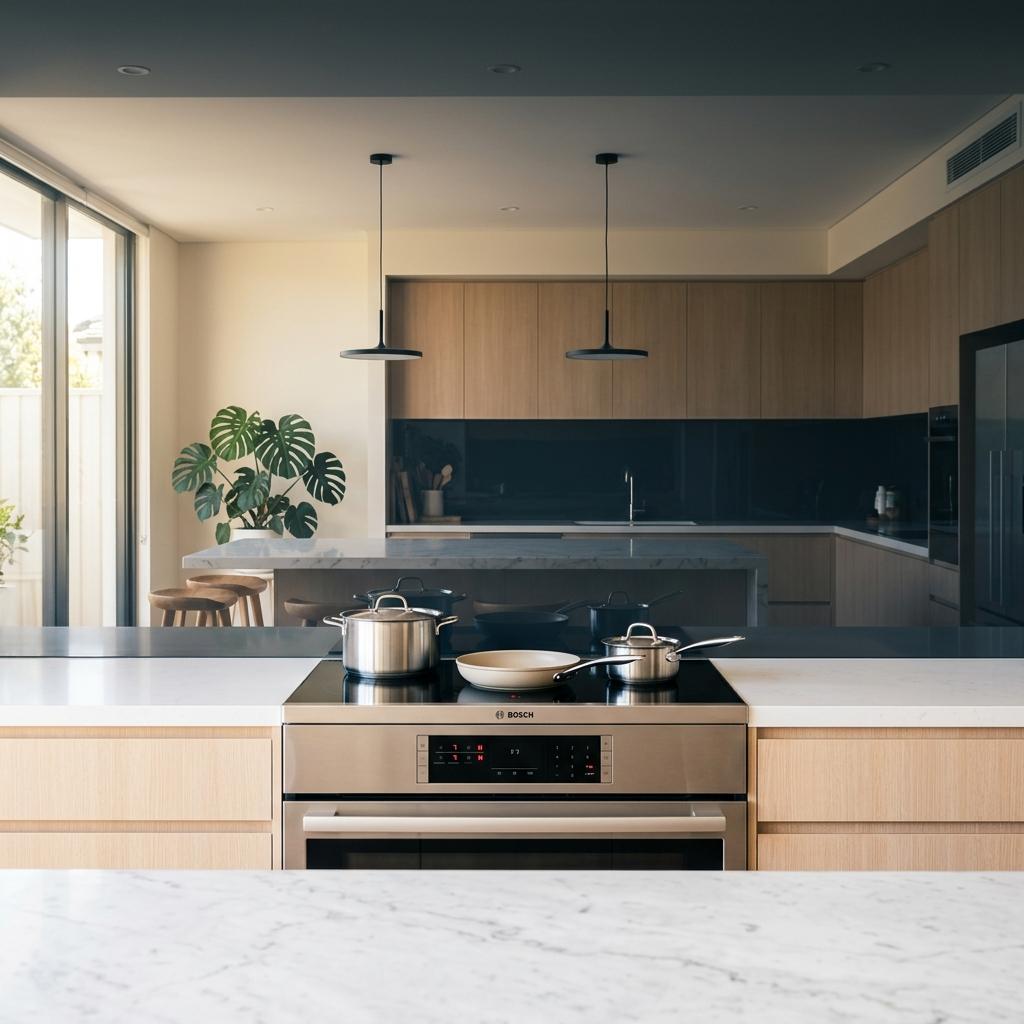
Acrylic Splashbacks Explained
Acrylic splashbacks are flat panels made from a single sheet of high quality acrylic — the same polymer used for aquariums, light fittings and display signage. Acrylic splashback panels are typically 4–6mm thick, supplied with a coloured or patterned backing, and installed directly onto the wall using adhesive. They’re lightweight, easier to handle and offer a cheaper alternative to glass for homeowners on a tight renovation budget.
Most acrylic panels sold in Australia are rear-painted to achieve solid colour, and some high quality acrylic products use digital printing to create patterns and textures. Because acrylic is lightweight, the sheet can be transported, cut and installed with basic tools, which reduces installation costs. That lightweight nature is part of the appeal — but it’s also where the product’s limitations start.
What Acrylic Splashbacks Do Well
- Affordability — acrylic is the cheapest splashback option aside from tiles, typically 30–50% less than painted glass splashbacks per square metre.
- Easy to install — the lightweight sheet can be easily cut with standard tools, making it popular for DIY projects.
- Colour options — acrylic is available in a huge variety of colours and finishes, including bold metallic colours and printed patterns.
- Impact resistance — acrylic won’t shatter on impact like untreated glass, which some homeowners find reassuring.
- Good for low-heat zones — acrylic is suitable for bathrooms, laundries and bar areas where there’s no heat source nearby.
Where Acrylic Falls Short
- Not heat resistant — acrylic warps, bubbles and discolours above about 80°C. That rules it out behind gas cooktops, electric cooktops and induction stoves where surface temperatures regularly exceed this. Most Australian standards recommend a minimum 200mm gap between acrylic panels and any heat source.
- Scratches easily — the soft surface of acrylic marks with abrasive sponges, kitchen knives sliding along the bench, or aggressive cleaning.
- UV discolouration — acrylic panels yellow and fade over 5–8 years in Perth’s strong natural light, especially in north-facing kitchens.
- Limited lifespan — acrylic typically needs replacing every 8–12 years.
Glass Splashbacks Explained
Glass splashbacks are custom-cut panels of toughened glass installed behind kitchen benches, cooktops, vanities and feature walls. The glass is heat-treated to roughly five times the strength of standard annealed glass, so it resists thermal shock, impact and scratching. Glass splashbacks are available in painted glass (solid colour applied to the back of the sheet), clear glass over feature walls, mirror splashbacks, digital print and textured options.
Perth kitchen installations almost always use 6mm toughened glass as the minimum, with some suppliers moving to 10mm for very large panels or feature walls. Because each splashback is cut to measure, the glass is tempered to suit the specific kitchen after sizing — which is why professional measuring is essential and why glass splashbacks arrive custom-made rather than off the shelf.
Why Homeowners Choose Glass Splashbacks
- Heat resistant — toughened glass is highly resistant to high temperatures and is safe for use behind cooktops. It won’t warp, melt, or discolour from hot pans and cooking heat.
- Durable — the surface is scratch resistant under normal kitchen use, resists staining from cooking oils and tomato-based sauces, and won’t fade under UV.
- Easy to clean — the non-porous surface wipes clean with a damp cloth. No grout lines to harbour mould or grease.
- Design versatility — painted glass can match any Dulux or Porter’s colour, giving homeowners unmatched flexibility in their kitchen design.
- Reflective surface — the polished glass surface bounces natural light around the kitchen, making smaller spaces feel larger.
- Longevity — a professionally installed glass splashback typically lasts 25+ years with no visible wear.
Where Glass Splashbacks Need Thinking Through
- Higher upfront cost — glass costs more than acrylic panels per square metre.
- Professional installation required — the weight of glass and precision of cutting rule out most DIY attempts.
- Lead time — because each panel is toughened after cutting, glass splashbacks typically take 10–14 working days from measure to install.
- Colour matching — the rear-painted colour can look slightly different once installed due to the green tint of standard float glass. Low-iron (Starphire) glass removes this tint but costs more.
Side-by-Side Comparison: Acrylic vs Glass Splashbacks
The comparison below covers acrylic and glass splashbacks across the factors that matter most for Perth kitchens and bathrooms. These are the differences between materials that will determine which splashback option suits your space, your budget, and your cooking style.
Heat resistance: Acrylic has limited heat tolerance — not suitable behind cooktops. Toughened glass is highly resistant and safe behind gas, electric and induction cooktops.
Scratch resistance: Acrylic scratches easily with abrasive cleaning. Toughened glass is scratch resistant under normal kitchen use.
UV fading: Acrylic yellows and fades over 5–8 years. Glass splashbacks show no UV fading — the colour is locked behind the glass.
Cost per square metre (installed): Acrylic sits at 100 to 350 dollars. Glass splashbacks sit at 140 to 650 dollars.
Lifespan: Acrylic 8–12 years. Glass 25+ years.
Cleaning: Acrylic needs gentle, non-abrasive cleaners only. Glass splashbacks wipe clean with any household glass cleaner.
Installation: Acrylic is lightweight and often DIY-friendly. Glass splashbacks require professional installation with specialist adhesive.
Colour options: Acrylic offers a wide range including metallic colours. Glass offers virtually unlimited colour — any paint colour can be rear-painted onto the glass.
Safety if impacted: Acrylic won’t shatter. Toughened glass breaks into safe rounded pieces rather than sharp shards.
Suitable for bathroom: Both are suitable — plus mirror splashbacks are available as a feature option in glass only.
Heat Resistance — The Factor That Decides Most Kitchens
If your splashback sits behind a cooktop, heat resistance is the one factor that overrides everything else. Most Australian building guidance requires a minimum clearance between any heat source and a non-heat-rated surface — typically 200mm for acrylic panels. That often rules out acrylic entirely in compact Perth kitchens where the cooktop is directly under a rangehood and the splashback runs floor-to-cabinet.
Toughened glass is highly resistant to high temperatures. It can handle the radiant heat from a gas flame, the direct contact of a hot pan briefly resting against the surface, and the thermal cycling that comes with daily cooking. Acrylic cannot — it softens, warps, and in severe cases can release fumes when exposed to an open flame.
For cooktop zones, glass is the only sensible splashback option. For bar areas, bathrooms, laundries, and feature walls, acrylic is a reasonable budget choice.
Cost Comparison — What You’ll Actually Pay in Perth
Splashback pricing varies by colour, thickness, complexity and whether there are cutouts for powerpoints and shelving. As a ballpark for a standard 2.4m x 600mm kitchen splashback, supplied and installed in the Perth metropolitan area:
- Acrylic splashback — 400 to 900 dollars installed, depending on colour and complexity. Plain white or single solid colours sit at the lower end.
- Painted glass splashback — 700 to 1,600 dollars installed. The standard product, available in any Dulux or Porter’s colour.
- Mirror splashback — 800 to 1,800 dollars installed. Clear, grey or bronze toned mirror.
- Printed glass splashback — 1,200 to 3,000 dollars or more installed. Digital print of any image or pattern.
- Low-iron (Starphire) glass splashback — add 25–40% over painted glass. Removes the green tint of standard float glass for true-to-colour whites and pastels.
The cost effective calculation changes over time. A 1,200 dollar glass splashback spread over 25 years is 48 dollars per year. A 600 dollar acrylic splashback replaced twice in that period costs 1,800 dollars total — or 72 dollars per year, plus the disruption of two reinstallations. Over the life of the kitchen, glass is often the cheaper option.
Durability in a Perth Climate
Perth’s long summers, UV intensity and drying westerly winds put splashback materials through a harder working life than most other Australian cities. Glass is unaffected by any of it — UV doesn’t touch it, temperature swings don’t expand or contract it, and the non-porous surface doesn’t absorb moisture.
Acrylic, by contrast, absorbs heat through sun-facing windows and can soften in very hot kitchens where the sun hits the splashback directly. Over five to eight years in a sunny Perth kitchen, an acrylic panel typically yellows, loses shine, and starts to show hairline scratches from cleaning — even careful cleaning. Glass keeps its factory finish for decades.
For coastal Perth homes exposed to salt air, glass is also the clear choice. Salt doesn’t etch glass the way it can dull acrylic surfaces over time.
Installation Differences
Installation sits at the centre of the cost difference between the two materials. Glass splashbacks require specialist adhesive, precise measurement, and a professional installer who can handle the weight safely. A 2.4m glass panel weighs 30–45kg depending on thickness — it’s not a one-person job, and incorrect handling can stress the glass at edges.
Acrylic panels weigh a fraction of that and can often be installed by a competent home renovator. The sheet can be easily cut with a scoring tool or jigsaw, bonded to the wall with construction adhesive, and sealed at the edges with silicone. The lightweight nature is a real installation advantage.
That said, professional installation still makes a visible difference on acrylic. Neat cutouts around power points, flush joins at internal corners, and silicone edges that don’t yellow all depend on experienced trades — and getting all that right often costs nearly as much in labour as the glass alternative.
Design and Aesthetic Differences
The visual difference between glass and acrylic shows up most in reflected light. A painted glass splashback has genuine depth — the colour sits behind a polished glass surface that reflects the kitchen’s lighting and bounces natural light around the room. The reflective surface is part of why glass splashbacks are popular in small or north-facing kitchens.
Acrylic has a matte to semi-gloss finish depending on the product. It can look identical to glass in a photograph — but side by side in a showroom, the difference in surface quality is obvious. Acrylic also scuffs and marks easily during installation, so minor surface imperfections may be visible close up.
For kitchen style purposes, both materials support modern, minimalist and bold colour schemes. Glass has the edge on elegance and depth; acrylic has the edge on bold, graphic colour and pattern options. For a mirror splashback — a growing trend in Perth kitchens for the way it opens up the space — glass is the only option.
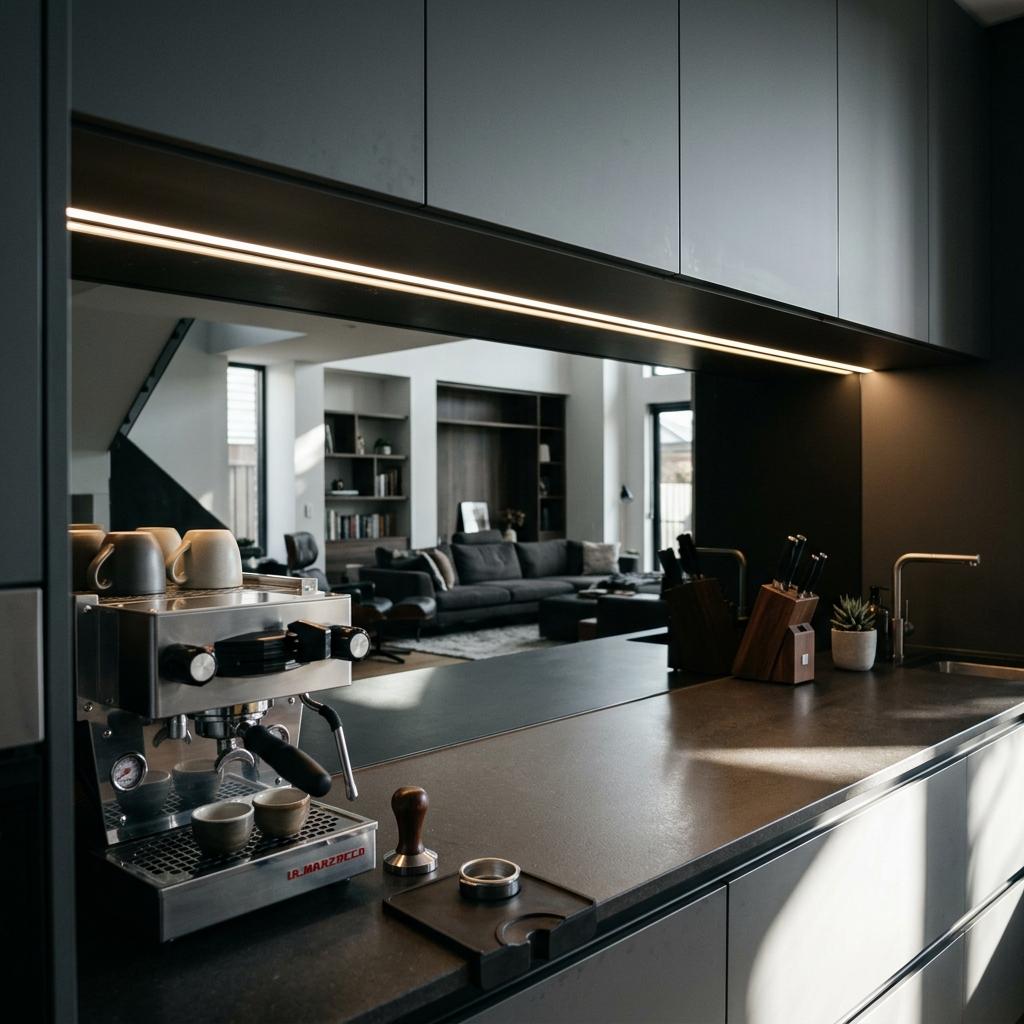
What About Tiles, Stainless Steel and Pressed Metal?
Tiled splashbacks remain the traditional choice and the cheapest material option if you already have a tiler on site for the rest of the kitchen. But tiles come with grout lines — and those grout lines collect cooking oils, food splatter and mould over time. Re-grouting is a regular maintenance job. Tiles are also slower to install than either glass or acrylic because each tile needs laying, levelling and grouting.
Stainless steel splashbacks and pressed metal splashbacks are other options that appear in modern industrial kitchen design. Stainless steel is heat resistant and durable but shows fingerprints and cleaning marks clearly. Pressed metal is a feature material rather than a practical splashback — attractive but harder to clean than either glass or acrylic panels.
For most Perth kitchens, the real choice is between glass and acrylic. Tiles suit a specific traditional aesthetic; stainless steel suits commercial-style kitchens; pressed metal suits heritage renovations.
Which Splashback Option Suits Your Kitchen?
Here’s the practical guide to choosing between acrylic and glass splashbacks:
Choose Glass Splashbacks If…
- Your splashback runs behind a cooktop — non-negotiable, acrylic is unsafe here.
- You want a splashback that still looks new in 20 years.
- You’re renovating for long-term home value — glass splashbacks add measurable resale appeal in Perth.
- You want a specific colour matched to cabinetry or stone benchtops.
- You want the reflective, luxurious finish that only painted glass delivers.
- You’re installing a mirror splashback or printed feature panel.
Choose Acrylic Splashbacks If…
- The splashback is in a bathroom, laundry, bar area or feature wall with no heat source.
- Your renovation budget is tight and you’re prioritising quick wins.
- You expect to renovate again in the next 5–10 years.
- You’re comfortable with gentler cleaning routines.
- You want a specific bold metallic or printed finish that’s cheaper in acrylic than in printed glass.
How Glazewell Approaches Glass Splashbacks
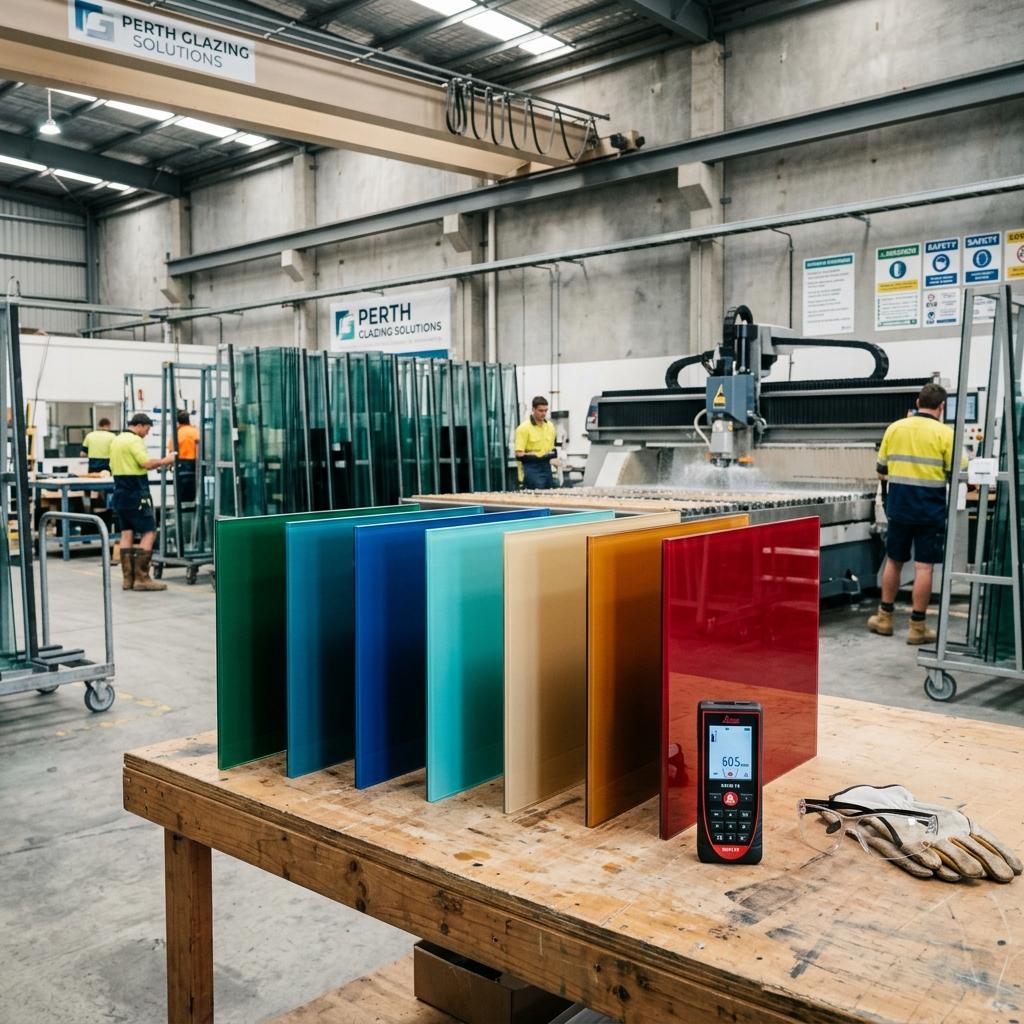
Glazewell has been supplying and installing glass splashbacks across Perth for over 25 years from our Gnangara showroom. Every panel is measured on site, cut to exact dimensions, toughened in our manufacturing facility, and installed by our own glaziers — we don’t subcontract installation.
The measure and quote process is obligation-free. We accommodate complex kitchen layouts including tiling run-outs, drop-downs, powerpoint cutouts, rangehood cutouts, and internal corners with matching silicone. Our standard product is 6mm toughened painted glass, with 10mm available for large-format feature walls. Colour samples are available at the showroom so you can see how the colour reads against your benchtop, cabinetry and floor before committing.
If you want to see glass samples and compare finishes, visit us at 30 Fortitude Boulevard, Gnangara WA 6077 Monday to Friday 8:30am to 5:00pm. Or request a free online quote and we’ll come to you.
Frequently Asked Questions
Are glass splashbacks more expensive than acrylic splashbacks?
Yes — upfront. Glass splashbacks cost roughly 30–50% more per square metre than acrylic splashbacks in the Perth market. A standard kitchen installation sits at 700 to 1,600 dollars for glass versus 400 to 900 dollars for acrylic. Over the 25+ year lifespan of a glass splashback, though, the cost per year is typically lower than acrylic, which often needs replacing within 8–12 years.
Can acrylic splashbacks be installed behind a cooktop?
No. Acrylic panels have limited heat resistance and aren’t safe behind gas, electric or induction cooktops. Most Australian product guidance requires a minimum 200mm clearance between acrylic and any heat source. If your splashback will sit behind a cooktop, toughened glass is the only safe option.
Do glass splashbacks break easily?
No. Glass splashbacks use toughened glass — roughly five times stronger than standard glass. If they do break under extreme impact, the toughening process ensures the glass shatters into small rounded pieces rather than sharp shards, similar to a car side window. Under normal kitchen use, a properly installed toughened glass splashback should last the life of the kitchen.
How long does it take to get glass splashbacks installed in Perth?
Typically 10–14 working days from measure to install. The process involves a site measure, quote approval, manufacturing (cutting and toughening the glass to your exact measurements), and installation. Acrylic splashbacks are faster — often 3–7 days — because the panel can be cut from stock sheet without the heat-treating step.
Can I get any colour in a glass splashback?
Virtually yes. Painted glass splashbacks can be colour-matched to any Dulux, Porter’s or Haymes paint code, giving you unlimited choice. The only consideration is that standard float glass has a slight green tint — so pure whites and pale pastels may read slightly different from the paint chip. For true-to-colour whites and pastels, specify low-iron (Starphire) glass, which adds about 25–40% to the panel cost.
Do acrylic splashbacks scratch easily?
Yes — more easily than glass. Acrylic is a softer material, and abrasive sponges, steel wool, or aggressive cleaning will mark the surface over time. Daily cleaning should use a soft microfibre cloth with warm soapy water only. Kitchen knives or utensils sliding across an acrylic surface will also leave visible scratches.
Which splashback material adds more value to my Perth home?
Glass splashbacks. Real estate agents and Perth buyers consistently rate glass as the premium splashback option — it signals a higher-spec renovation and is a common upgrade in display homes and high-end rentals. Acrylic splashbacks are sometimes flagged by buyers as needing replacement, which can affect negotiation. For any home you plan to sell within the next decade, glass is the better investment.
Ready to Choose a Splashback for Your Perth Kitchen?
Both acrylic and glass splashbacks have a place in Perth homes — but for kitchens with a cooktop, for homeowners who want a splashback that lasts, and for any installation where long-term appearance matters, toughened glass is the stronger choice. Glazewell supplies and installs custom painted glass splashbacks, mirror splashbacks and printed glass splashbacks across the Perth metropolitan area.
Book a free measure and quote today. Visit our Gnangara showroom to compare colours against samples, or call us on 08 9385 5000 to schedule an on-site measure at your home
When comparing kitchen splashbacks for long-term durability and build quality, Perth homeowners consistently tell us the durability of toughened glass beats every alternative in our showroom — and the quality of finish on kitchen splashbacks of this spec is visibly higher than acrylic or tile equivalents. We select every glass splashback panel for colour consistency and durability before it leaves our Gnangara facility, and only glass with that level of quality gets installed in Perth kitchens.
For Perth homeowners deciding between kitchen splashbacks in toughened glass versus acrylic, the decision often comes back to how long you want those kitchen splashbacks to last. Modern kitchen splashbacks in painted glass hold their finish for decades, which is why glass now dominates the premium end of the Perth splashback market.
.