

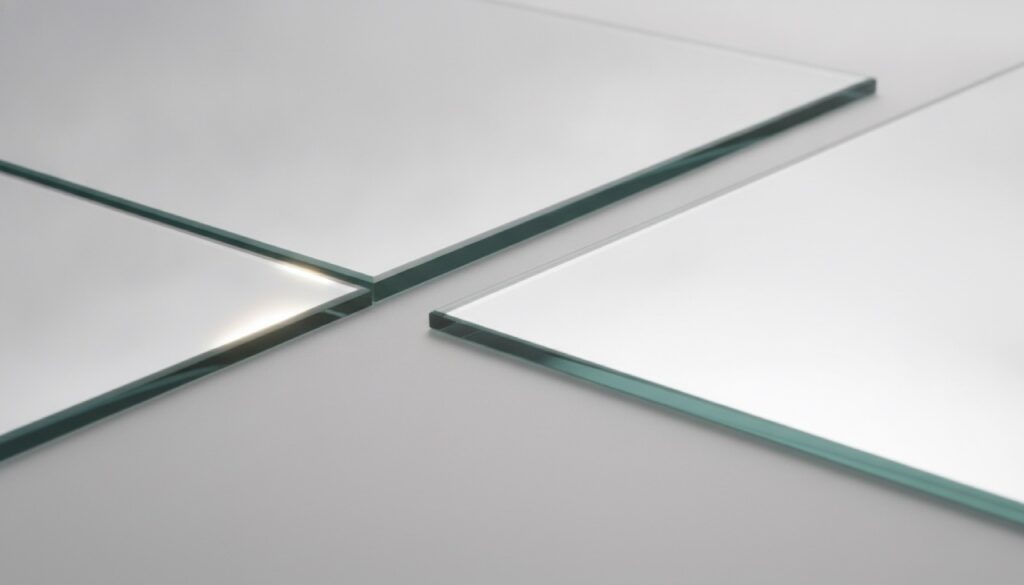
When you order a frameless mirror, one small detail shapes the whole look: the edge. The two most popular finishes are a bevelled edge and a polished edge, and the choice comes down to the style you are after — decorative and light-catching, or clean and minimal. This guide explains the difference between bevelled and polished edge mirrors, how each suits different Perth bathrooms, and how to choose the right one.
Key Takeaways
- A bevelled edge is cut and polished at an angle, creating a sloped border that catches the light and adds a decorative, framed look without a frame.
- A polished edge is ground flat and smooth, giving a clean, near-invisible edge that suits modern, minimal bathrooms.
- Bevelled mirrors suit traditional, Hamptons, and classic styles; polished edge mirrors suit contemporary and frameless looks.
- Glazewell offers both, with bevel widths from 5mm to 45mm, cut to any custom size.
- Both edges are safe, easy to clean, and available framed or frameless — the decision is mostly about style.
What Is a Bevelled Edge Mirror?
A bevelled edge mirror has its border cut and polished at a shallow angle, so the perimeter slopes back from the mirror surface. That angled cut does two things. Visually, it creates a subtle “frame” around the glass without any actual frame. And optically, the slope catches and refracts light, throwing a faint prism-like sparkle along the edge that flat glass cannot. The result is a mirror with more depth and a touch of elegance — which is why bevelled mirrors are a staple of traditional, Hamptons, Art Deco, and classic bathroom styles.
The width of the bevel changes the effect. A narrow bevel is understated; a wide bevel makes a bolder, more decorative border. Glazewell cuts bevels from 5mm up to 45mm, so you can dial the look from subtle to statement.
What Is a Polished Edge Mirror?
A polished edge mirror has its edge ground flat and buffed smooth, square to the mirror face. There is no angle and no border effect — just a clean, seamless edge that lets the glass read as a single, uninterrupted surface. This is the most popular finish for modern and minimalist bathrooms and the default for a frameless look, because the edge all but disappears and puts the focus on the reflection rather than the frame.
A close relative is the pencil edge, where the edge is rounded rather than flat — even softer to the touch and just as understated. Both polished and pencil edges share the same clean, contemporary character.
Bevelled vs Polished Edge: The Key Differences
Both finishes are frameless, safe and easy to live with, so the differences are mostly about style and light:
- Look: bevelled adds a decorative, framed border; polished is clean and near-invisible.
- Light: a bevel refracts light for a subtle sparkle; a polished edge stays flat and minimal.
- Style fit: bevelled suits traditional, Hamptons and classic rooms; polished suits modern and contemporary.
- Cost: a bevelled edge involves extra grinding, so it usually costs a little more than a polished edge.
- Presence: bevelled draws the eye to the mirror as a feature; polished lets the mirror sit quietly in the design.
Which Edge Suits Your Bathroom Style?
If your bathroom leans modern, minimal or industrial — flat tiles, clean lines, matte black or brushed tapware — a polished edge mirror keeps everything sleek and lets the mirror blend in. If your bathroom is more traditional, Hamptons, coastal or classic — shaker vanities, detailed tiling, warm metals — a bevelled mirror echoes that craftsmanship and adds a sense of quality. In a transitional bathroom that mixes both, a slim bevel is a safe middle ground: a hint of detail without tipping into ornate.
Bevel Width and Edge Options
Bevel width is where you fine-tune the effect. As a guide, a 5mm to 12mm bevel reads as a refined, barely-there border that suits most contemporary-leaning bathrooms; a 20mm to 45mm bevel makes a pronounced, decorative statement better suited to classic and feature mirrors. Beyond bevelled and polished, you can also choose framed mirrors (aluminium or timber-look framing) if you want a defined border in a specific colour, or a fully frameless mirror in either edge finish. Glazewell cuts all of these to custom sizes for vanities, feature walls and full-length mirrors.
Cost, Cleaning and Safety
On price, a polished edge is typically the most economical finish, with a bevelled edge costing a little more for the extra processing — and a wider bevel costing more than a narrow one. On cleaning, both wipe down like any mirror; the only minor difference is that a wide bevel has a shallow ledge that can collect a little dust, so an occasional wipe along the edge keeps it crisp. On safety, every edge should be properly finished rather than left raw — a professionally ground and polished edge is smooth, safe to handle and far less prone to chipping, which is exactly how Glazewell finishes every custom mirror.
Other Mirror Options to Consider
The edge is one decision; the mirror type is another. If you want built-in lighting, an LED mirror combines flattering illumination with a clean modern edge. If storage is tight, a mirrored or shaving cabinet hides shelving behind the glass. And mirrors come in round, oval, rectangular and full-length shapes, each available with a bevelled or polished edge. Pairing the right edge with the right shape and size is what makes a mirror feel made for the room.
Choosing Your Mirror With Glazewell
As established Perth glaziers, Glazewell supplies custom mirrors with both bevelled and polished edges — cut to your exact size, with bevel widths from 5mm to 45mm, in framed, frameless, round and full-length styles. The team can show you the edge finishes in person and help you match the right one to your bathroom’s style, so the mirror looks intentional rather than off-the-shelf.
A Closer Look at Mirror Edge Finishes
Glass edges can be finished in a few ways, and the terms are worth knowing. A flat edge (also called a straight edge) is ground square and sanded smooth — the basis of a polished edge. A pencil polished edge rounds that flat edge slightly. A bevel adds slanted edges, angled and polished edges that slope back from the face; a popular choice is a one inch bevel for a bolder border. Whatever the finish, the edges should never be left as raw, sharp edges or sharp corners — a properly sanded, seamed edge is the safer option, smooth to handle and resistant to chipping. Edge finish also depends on glass thickness, because thicker glass holds a wider, crisper bevel, so confirm the mirror thickness when you order.
How the Edge Changes Light and Space
The edge does more than decorate. A bevel works by reflecting light along its slope, so a bevelled mirror seems to enhance light and adds a faint glam effect that usual plain looking mirrors lack. In a small bathroom, a well-placed mirror bounces both lamplight and natural light around the room, creating the illusion of more space and a brighter, more open interior space. A polished edge keeps things stylish and minimal, while a bevel feels a touch more chic. Either way, a mirror is one of the easiest ways to make a bathroom feel bigger and brighter.
Choosing a Mirror to Match Your Space
Mirrors come in various shapes — round, oval and rectangle — and a bevelled or polished edge works on any of them. Beyond the bathroom mirror over the vanity, a wall mirror can complement a hallway, bedroom or even dining rooms, and the same edge choices apply throughout the house. Think about how the mirror will hang and what sits near it, so an edge that picks up nearby windows, tiling or décor will complement rather than clash. Choose the edge you prefer, a shape that suits your décor and will match the room, and a size that is functional for the people using it — a mirror that ticks all three is both practical and a stylish idea. Glazewell can finish the edges to cover any cut size and supply fixings so the mirror sits flush and secure.
Frequently Asked Questions
What is the difference between a bevelled and a polished edge mirror?
A bevelled edge is cut at an angle to create a decorative, light-catching border around the mirror, while a polished edge is ground flat and smooth for a clean, near-invisible finish. Bevelled suits traditional styles; polished suits modern, minimal bathrooms.
Is a bevelled or polished edge better for a modern bathroom?
A polished (or pencil) edge usually suits a modern bathroom best, because the seamless edge keeps the look minimal. A slim bevel can also work in a transitional space if you want a subtle hint of detail.
Do bevelled-edge mirrors cost more?
Usually, a little more than a polished edge, because the angled bevel requires extra grinding and polishing. A wider bevel costs more than a narrow one. The difference is modest and depends on the mirror size and bevel width.
What bevel width should I choose?
A 5–12mm bevel gives a refined, subtle border that suits most bathrooms, while a 20–45mm bevel makes a bolder, decorative statement. Glazewell cuts bevels across this full range.
Are bevelled and polished edge mirrors safe and easy to clean?
Yes. Both have professionally finished edges that are smooth and safe to handle, and both clean like any mirror. A wide bevel has a small ledge that can gather dust, so an occasional wipe keeps it crisp.
Can I get a bevelled or polished edge on a custom-size mirror?
Yes. Glazewell cuts both edge finishes to any custom size for vanity, wall, round and full-length mirrors, framed or frameless.
Find the Right Mirror Edge for Your Bathroom
Whether you want the clean simplicity of a polished edge or the decorative sparkle of a bevel, Glazewell can cut a custom mirror to suit your Perth bathroom. Request a free quote and our team will help you choose the edge, shape and size that fits your space.