

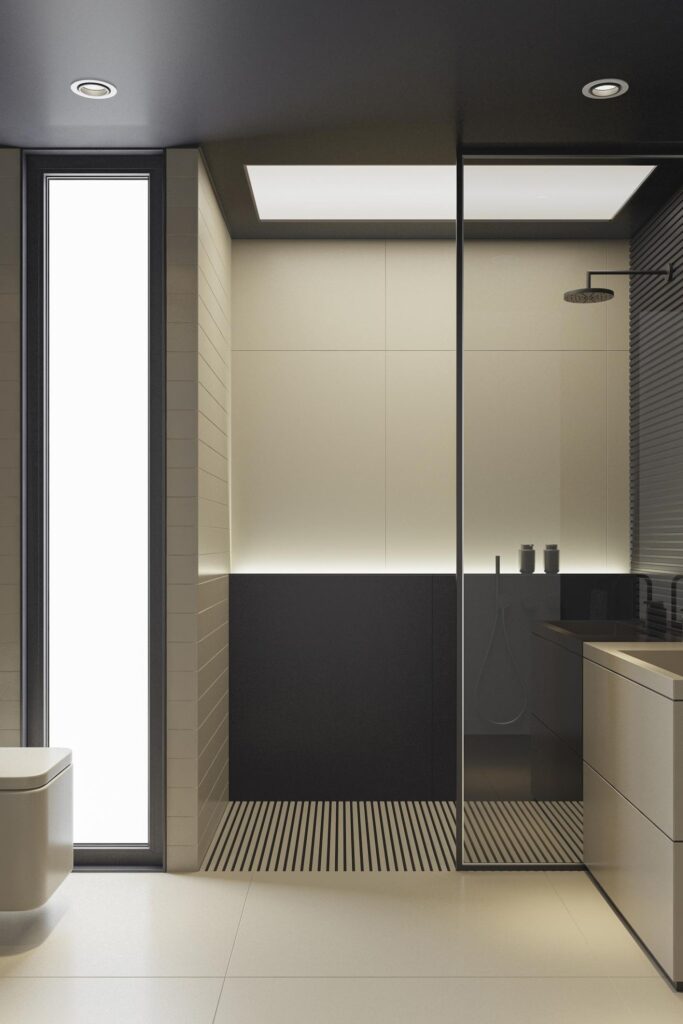
Hobless showers — also called curbless or level-entry showers — sit flush with the bathroom floor without the small raised “hob” or kerb that used to mark the boundary of a wet area. They are the fastest-growing shower configuration in Perth bathroom renovations because they look better, feel more open, are safer for ageing-in-place, and finally became affordable thanks to modern drain technology.
This guide explains what a hobless shower is, why Perth renovators are choosing it, how it works structurally, and what you need to specify on the glass shower screen side to make sure the install lasts.
What Is a Hobless (Curbless) Shower?
A hobless shower has no raised threshold between the shower floor and the rest of the bathroom. The shower floor sits on the same plane as the room floor, often with a continuous tile pattern running from outside the shower into the wet area. Water is controlled entirely by a strategically placed linear drain and a precisely graded shower floor.
The terms hobless, curbless, kerbless, and level-entry are used interchangeably in Australia. Walk-in showers can be hobless or hobbed — the two terms describe different things (presence of a door vs presence of a hob).
Why Hobless Showers Are Taking Over Perth Bathroom Renovations
Three reasons drive the shift:
Visual openness
A hobless shower makes a small bathroom feel up to 30% larger. There’s no visual interruption between the shower zone and the rest of the room, and continuous tile flow exaggerates the perceived floor area. In Perth’s high-rise apartments and older 1970s-80s renovations with tight bathrooms, this is the single biggest aesthetic win.
Ageing in place and accessibility
A level-entry shower eliminates the trip hazard of a hob. Australian Standards for accessible bathrooms (AS 1428.1) call for hobless or low-threshold showers for wheelchair access and aged-care fit-outs. More homeowners now ask for hobless showers as a future-proofing investment even when no one in the household needs accessible access today.
Easier cleaning
No hob means no grout line between the bathroom floor and the shower floor — fewer places for soap scum and mould to gather. Linear drains are also easier to clean than the central drains used in traditional hobbed showers.
How a Hobless Shower Drain Works
A traditional Perth shower has a central floor waste with the floor falling toward it from all four corners — typically a 1.5% gradient. That’s only possible because the hob contains the water.
A hobless shower instead uses a linear drain (also called a tile-insert or channel drain) running along one side of the shower — usually against the back wall, the shower wall, or directly in front of the shower glass. The entire shower floor falls in one direction toward this single linear drain. Because the gradient runs in one plane only, water can be controlled without a hob.
Linear drain widths typically range from 600mm to 1,200mm. The grate sits flush with the tile, often tile-inserted so the drain itself disappears into the floor pattern. Modern brands (ACO, McAlpine, Stormtech) all carry hobless-ready linear drain systems in Perth.
Frameless Glass for Hobless Showers — What to Spec
The shower screen on a hobless shower has some specific considerations:
• Glass-to-floor clearance: the bottom of the glass typically sits 5-10mm above the finished tile to allow water flow toward the drain. A drip strip silicone-sealed to the glass directs splash water back into the shower.
• Floor-mounted brackets: instead of (or in addition to) wall brackets, hobless installations often use stainless steel floor mounts to anchor fixed panels.
• Glass thickness: 10mm toughened safety glass is standard for hobless frameless installations. Thicker glass is needed because there’s no hob bracing the bottom edge.
• Door swing: outward-swinging doors are recommended. A glass door that swings inward over a wet, flush floor can drag water across the bathroom.
All Glazewell hobless shower screen installations are built to AS1288 using Grade A toughened safety glass and come with a certificate of compliance.
Hobless Shower Installation: What Your Tiler & Glazier Need to Know
Hobless showers are a coordination job between tiler, plumber, waterproofer, and glazier. The most common Perth installation failures come from poor sequencing, not poor product:
1. Waterproofing membrane must extend at least 1.8m up the walls and across the full bathroom floor — not just the shower zone. This is the single most important step in a hobless install.
2. Floor gradient must be 1.5-2% toward the linear drain. Too flat and water pools. Too steep and the floor feels uncomfortable.
3. Substrate prep needs to factor in the screed depth required to create the gradient. In existing renovations this often means dropping the bathroom floor 30-50mm to maintain ceiling clearance.
4. Glazier on-site check measure happens after tiling is complete. Choose a service providing a physical on-site check measure to account for unlevel tiling and walls — this matters even more in hobless showers because there’s no hob to absorb measurement error.
Hobless Shower Costs in Perth
A hobless shower typically costs 15-30% more than a traditional hobbed shower in the same bathroom. The cost comes from:
• Linear drain (typically $400-$900 supplied)
• Additional floor screed and tiling labour for the gradient
• Extra waterproofing
• Sometimes structural work to drop the bathroom floor
The frameless glass shower screen itself is priced similarly to a hobbed install — most Glazewell hobless shower screens fall between $1,400 and $3,800 supplied and installed, depending on size and configuration.
Frequently Asked Questions
What’s the difference between a hobless shower and a walk-in shower?
A walk-in shower describes a configuration with no swinging door (you walk in directly). A hobless shower describes a configuration with no raised threshold. A shower can be one, the other, or both. Most modern Perth walk-in showers are hobless.
Will water escape from a hobless shower?
Not if it’s built correctly. Proper floor gradient, a correctly sized linear drain, and a well-sealed shower screen contain all but the most extreme splashing. The waterproofing membrane underneath catches anything that does escape.
Can I retrofit a hobless shower into an existing bathroom?
Usually yes, but it’s invasive. The bathroom floor typically needs to drop by 30-50mm to create the screed for gradient. New waterproofing is required. New floor tiling. New drainage. Budget for a full bathroom renovation, not a shower-only refresh.
Are hobless showers safe for elderly or wheelchair users?
Yes — that’s one of the main reasons they’re specified. Combined with grab rails, slip-resistant tile (R10 or higher), a shower seat, and appropriate door clearance, a hobless shower meets AS 1428.1 accessible bathroom standards.
How wide should a hobless shower be?
1,200mm wide is comfortable for one person. 1,500mm or wider feels luxurious and accommodates a second person, a seat, or wheelchair turning radius. Glazewell can configure frameless glass for any width from 700mm upward.
Do I need a shower screen on a hobless shower?
Highly recommended in Perth. A truly screen-free walk-in works in very large bathrooms with the shower far from other fixtures, but in standard Perth bathrooms a glass screen contains spray, keeps the rest of the floor dry, and stops the door area becoming a slip hazard.
Book a Free Hobless Shower Consultation
Glazewell installs hobless and curbless frameless shower screens across the Perth metropolitan area. Visit our showroom at 30 Fortitude Boulevard, Gnangara to see examples and discuss your bathroom layout. Call (08) 9316 6821 or request a quote online for a free on-site check measure.